Choosing Fabrics for Bridal Collections
Bridal cloth carries embroidery, hours of wear, camera light and a customer's most photographed day. A structured way to build the fabric plan.
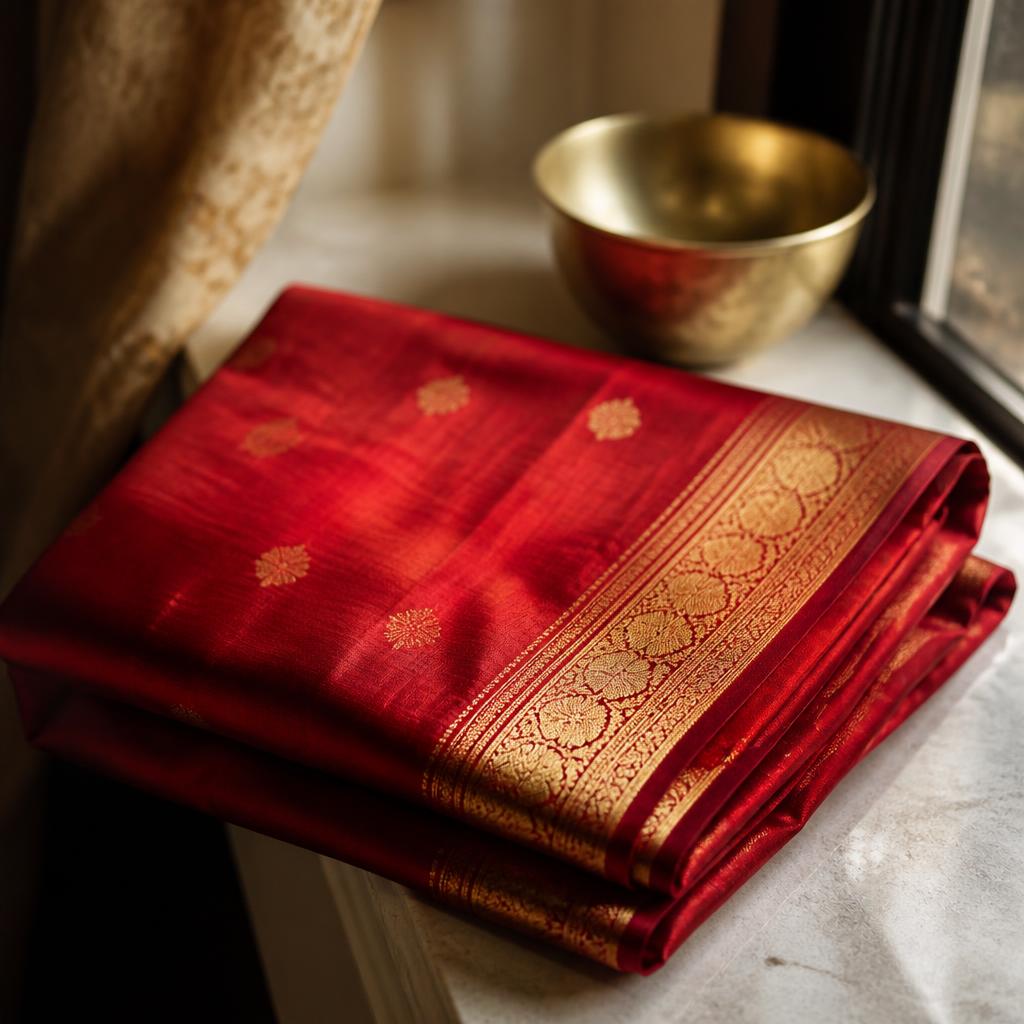
A bridal fabric decision is never only aesthetic. The cloth has to survive weeks of hand embroidery on a frame, hold a heavily worked skirt without collapsing, photograph well under mixed lighting, and remain wearable for twelve hours in a Gujarat summer.
The designers who get this right work the fabric plan in layers — base, structure, lining, drape and accents — rather than choosing one hero cloth and forcing everything else around it.
Start with the embroidery, not the fabric
If a garment is heavily worked, the embroidery dictates the base. Dense zardozi, dabka and heavy sequin work need a stable ground that will not pucker on the frame — silk dupion, raw silk, heavy satin, velvet or a well-constructed brocade.
Light thread work, chikankari or fine sequins can sit on organza, georgette, Chanderi or fine silk, where the appeal lies in seeing the work float on a translucent ground. Choosing a delicate base for heavy work is the most common and most expensive error in bridal production.
- Heavy zardozi and dabka — dupion, raw silk, satin, velvet, brocade
- Medium thread and sequin work — silk crepe, georgette, heavier organza
- Fine and open work — Chanderi, organza, tissue, fine silk
Plan weight and wearability honestly
A fully worked lehenga can pass eight kilograms. Every additional gram of base cloth multiplies through the skirt panels, so the choice between a 300 GSM and a 400 GSM base is a comfort decision for the bride, not a technical footnote.
Where volume is needed without weight, build it with canvas, horsehair braid or layered net inside rather than with a heavier face cloth. The silhouette holds and the garment stays wearable.
Colour under real light
Bridal garments are seen in daylight, tungsten, LED and camera flash within a single day, and silk in particular shifts noticeably between them. Approve every bridal shade under at least daylight and warm artificial light before signing the lab dip.
Metallics deserve extra care. A gold that reads warm in the studio can flash green under LED. Where a collection is built on a single signature gold, hold that shade constant across suppliers and lots by fixing it to one approved standard swatch.
- Approve lab dips under daylight and warm light, minimum
- Photograph approved swatches with flash before confirming
- Fix one master gold standard for the whole collection
Linings, hand-feel and finishing
Bridal linings are worn against skin for hours. Cotton, bemberg and fine silk breathe; cheap polyester taffeta does not, and no amount of exterior beauty compensates for a bride who is uncomfortable by the third hour.
Detail the inside as carefully as the outside — bound seams, soft cancan finishes, covered hooks, and no exposed embroidery knots against the body. This is where couture separates from expensive.
Quantity, lot control and time
Bridal fabric almost always runs short. Buy generously — embroidery frames consume more than pattern layouts predict, sampling absorbs metres, and a shade match six weeks later is rarely exact.
Reserve the full requirement from one dye lot at the outset. On handloom and hand-dyed cloth, insist on lot numbers and keep a reference cutting from each. Then build the timeline backwards from the wedding date, with slack for lab dips, embroidery and final fittings.
- Buy 15–20 percent over calculated requirement on worked garments
- Reserve the entire quantity from a single dye lot
- Retain a reference cutting from every lot received
- Schedule lab dips and embroidery time before promising delivery
- Let the embroidery weight choose the base cloth, not the other way round.
- Build volume with internal structure rather than heavier face fabric.
- Approve bridal colour under multiple light sources, and fix one master gold.
- Specify breathable linings and finish the inside to couture standard.
- Over-buy, single-lot the order, and plan the calendar backwards.
Bring the question to the studio
Reading only takes you so far. Handle the cloth, compare qualities side by side, and let us build the fabric plan for your collection with you in Ahmedabad.