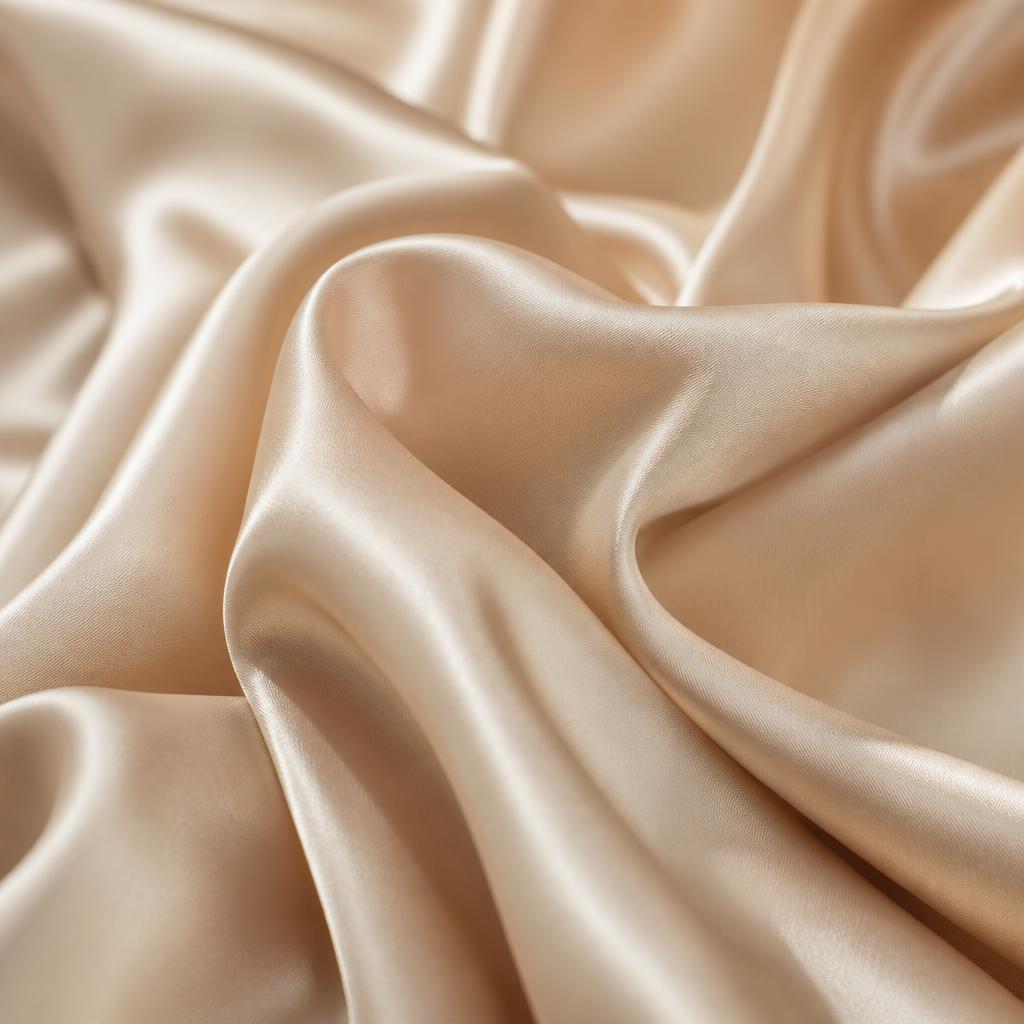
Silk Fabrics
Indian and imported silks — dupion, katan, crepe, satin, tussar and mulberry — selected for hand, weight and how they behave once cut.
- Indian sources
- Karnataka, Bengal, Bhagalpur, Varanasi
- Weaves stocked
- Dupion, katan, crepe, satin, organza
- Wild silks
- Tussar, eri, muga
- Formats
- Metre, roll, bulk lots
Silk is a fibre, not a fabric, and almost every problem in silk buying comes from treating it as one. Mulberry silk from cultivated Bombyx mori gives the smoothest, most uniform filament — the base for katan, crepe and satin. Wild silks such as tussar, eri and muga come from uncultivated moths, producing shorter, coarser filament with natural slub, a warmer gold-brown cast and a drier hand. Neither is superior; they are different materials that happen to share a name.
Then there is weave, which determines behaviour more than fibre does. Dupion has slubbed weft and a papery crispness that suits structured jackets and lehengas. Crepe, with its high-twist yarn and matte pebbled surface, drapes fluidly and photographs without glare. Satin weave floats warp threads on the surface for a liquid shine, and is unforgiving of pins and needle marks. Chiffon and georgette are silks too, sheer and fluid. When you brief us, describe the hand and behaviour you want — crisp, fluid, matte, lustrous, heavy — and we will match the fibre and weave to it, rather than sending whatever is called silk this week.
Characteristics of silk
Lustre
The triangular filament refracts light, giving silk a depth of shine that synthetics approximate but do not equal.
Strength
Exceptionally strong for its weight, which is why very fine silks still tailor and wear well.
Thermal comfort
Breathable and temperature-adaptive — cool in heat, insulating against cold.
Dye affinity
Takes dye with unmatched saturation; jewel tones on silk are difficult to reproduce elsewhere.
Drape range
From the board-like crispness of dupion to the liquid fall of crepe-back satin.
Care demand
Water spots, sun-fades and marks from pins; most qualities are dry clean only.
Where silk is used
It carries the top end of almost every category we supply.
- Bridal and occasion couture in dupion, katan and satin
- Fluid resort and evening wear in crepe, chiffon and georgette
- Structured jackets, bandhgalas and sherwanis
- Sarees and dupattas across Indian weave traditions
- Linings where a premium hand justifies the cost
- Scarves, stoles and accessory programmes
Sourcing silk through VPAS ANANT
Silk is the category where description drifts most, so we buy and quote on measurable terms.
- Pure silk and silk-blend options quoted with composition stated
- Weight quoted in GSM or momme so bulk matches your sample
- Indian handloom silks alongside imported mill silks
- Wild silk programmes — tussar, eri and muga — for texture-led collections
- Colour development on the exact base, since silk shades shift by weave
- Sampling metreage before bulk, with reserved dye lots for repeat orders
Customisation available on this fabric
Custom Dyeing
Silk-specific dyeing with lab dips on the actual weave; matte crepe and lustrous satin read the same dye very differently.
Digital Printing
Reactive and acid printing on silk with strike-offs to confirm colour depth and hand after steaming and washing.
Hand Block Printing
Traditional block work on lighter silks for craft-led collections.
Embroidery
Zardozi, aari, French knot and sequin work, with backing chosen so fine silk grounds do not pull.
Finishing
Sand-wash, degumming and softening to move a silk from crisp to fluid without losing lustre.
Bulk Supply
Dye-lot control across bulk so a re-order in the next season still matches.
See the full range of our capabilities or read how a programme runs from brief to bulk.
Why source silk from us
Composition on record
Pure silk, blended and art silk are labelled as such — no euphemisms on the invoice.
Weight-specified buying
GSM or momme is stated, so bulk cannot quietly arrive lighter than the sample.
Both sides of the market
Indian handloom traditions and imported mill silks from one desk.
Processing expertise
Twenty years of knowing which silk survives which finish, and which does not.
Frequently asked
How can I tell pure silk from art silk?
Pure silk has an uneven natural lustre, warms quickly in the hand and, in a burn test on a spare thread, smells of burnt hair and leaves crushable ash. Art silk (viscose or polyester) shines uniformly, stays cool and melts into a hard bead. We also state composition on every quotation.
What is the difference between dupion and raw silk?
Raw silk broadly describes minimally processed silk with the natural gum retained, giving a dry, textured hand. Dupion is a specific fabric woven with slubbed weft from double cocoons, producing its characteristic crisp body and irregular surface.
Which silk is best for summer?
Lighter weaves — silk crepe, chiffon, georgette and fine habutai — breathe well and stay comfortable. Heavy dupion, satin and brocade are better suited to cooler weather or short-wear occasion pieces.
Can silk be washed?
Some lightweight silks tolerate careful cold hand-washing with a mild detergent, but dry cleaning is safer for structured, dyed or embellished pieces. Never wring, and always dry away from direct sun.
Do you supply silk in bulk?
Yes, in metre, roll and bulk lots. For bulk we reserve dye lots and record the approved standard so repeat orders match across seasons.
Browse the full fabric catalogue or see the industries we serve.
- Premium Fabric Supplier in AhmedabadCurated premium cloth, swatches and development from our Bopal studio.
- Textile Supplier in AhmedabadGreige to finished across cotton, silk, linen, viscose and blends.
- Textile Sourcing Partner in GujaratCluster selection, vendor vetting and inspection across the state.
- Designer Fabric Supplier across IndiaSwatches couriered and bulk dispatched to labels nationwide.
Enquire about silk
Describe the hand, weight and colour you need. We will send matched swatches with composition and GSM stated.