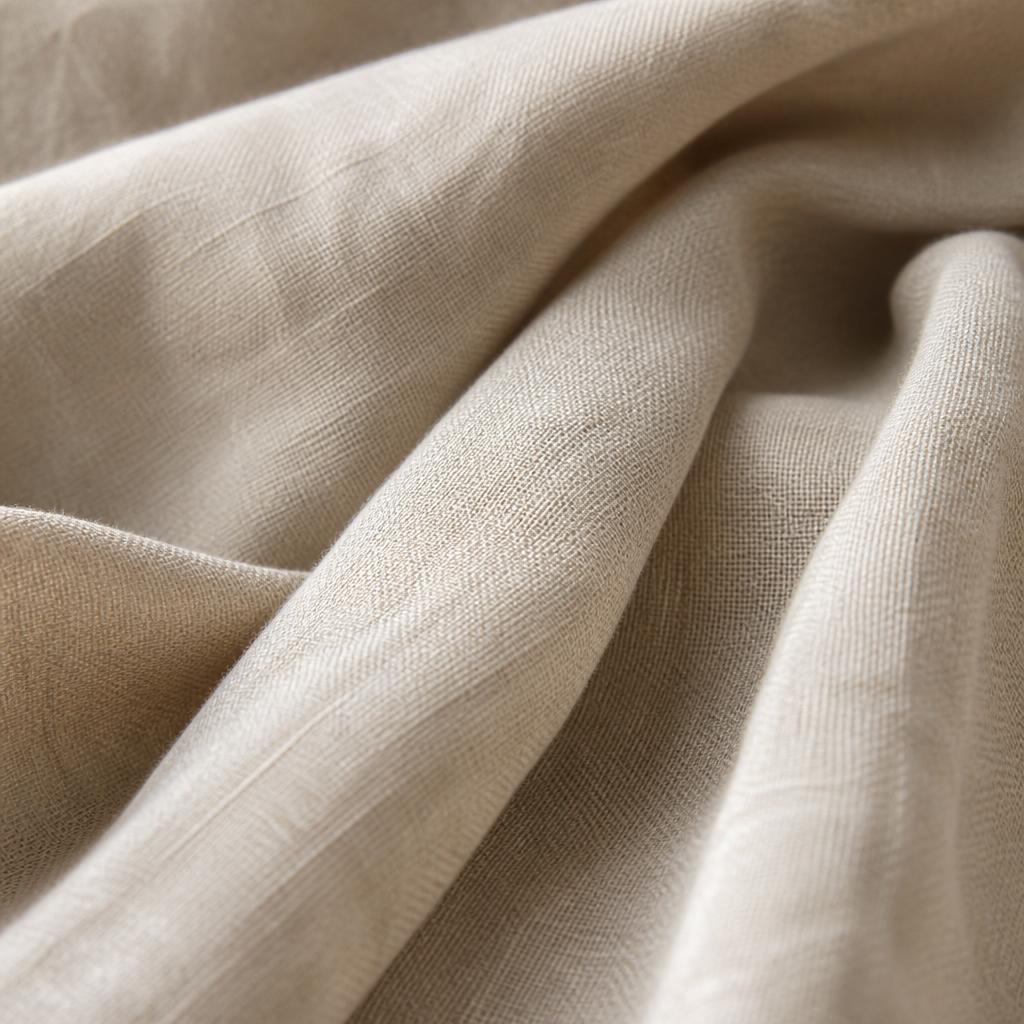
Linen Fabrics
Flax-woven cloth in shirting, suiting and blended weights — dry to the touch, cool to wear, and honest about its creases.
- Fibre
- Flax — pure and blended
- Weights
- Shirting 120–180, suiting 200–280 GSM
- Blends
- Linen-cotton, linen-viscose, linen-silk
- Finishes
- Soft-wash, enzyme, crease-relaxed
Linen is spun from flax, a bast fibre with a hollow structure that wicks moisture and releases it fast — which is why linen feels cool in humidity where cotton starts to feel damp. The fibre is stronger than cotton and gets softer with every wash rather than wearing thin, so a good linen garment improves for years. Its natural slub, the small thick-thin variation along the yarn, is a property of the fibre and not a defect.
The trade-off is creasing, and how a buyer handles that determines which quality to choose. Pure linen creases sharply and unapologetically; brands that lean into that aesthetic prefer it. Linen-cotton blends soften the crease and lower cost. Linen-viscose adds fluid drape for dresses and wide trousers. Linen-silk raises lustre for occasion pieces. Finishing matters just as much: enzyme and soft-wash treatments relax the hand considerably from loom-state stiffness. Tell us how much crease you are willing to live with and we will point you to the right construction.
Characteristics of linen
Coolness
High moisture absorption and fast release make it the most comfortable natural in humid heat.
Dry hand
A crisp, slightly grainy touch quite distinct from cotton's softness.
Natural slub
Irregular yarn thickness gives visible character — the fabric's signature, not a flaw.
Strength
Among the strongest natural fibres, and stronger still when wet.
Ages well
Softens progressively with washing while retaining structure.
Creases
Creases readily; blends and relaxed finishes moderate this without eliminating it.
Where linen is used
A resort, summer and quiet-luxury staple across menswear and womenswear.
- Shirts, kurtas and relaxed summer tailoring
- Unstructured jackets, blazers and co-ord sets
- Wide trousers, dresses and resort collections
- Sarees and dupattas in fine linen counts
- Table linen, cushions and interior soft goods
- Layering pieces where breathability outranks polish
Custom linen sourcing
Weight and finish drive both cost and behaviour, so both are locked before bulk.
- Pure linen and linen blends across shirting to suiting weights
- European and Indian flax sources, quoted on merit and price
- Yarn-dyed stripes, checks and chambray developed to artwork
- Enzyme, soft and stone-wash finishes to a supplied hand-feel sample
- Piece-dyed solids matched to a Pantone or swatch reference
- Bulk supply with shrinkage tested and stated before cutting
Customisation available on this fabric
Custom Dyeing
Piece dyeing on linen with an allowance for its natural cast; dips approved on the washed, finished state.
Digital Printing
Print on prepared linen where the slub becomes part of the design rather than fighting it.
Hand Block Printing
Block work sits well on medium-weight linen for craft-led summer collections.
Embroidery
Thread and cutwork embroidery on stable linen grounds, backed where the weave is open.
Wash & Finishing
Enzyme, silicone and stone washes to move linen from crisp loom-state to lived-in softness.
Bulk Supply
Consistent slub character and shade across the lot, verified before dispatch.
See the full range of our capabilities or read how a programme runs from brief to bulk.
Why source linen from us
Honest labelling
Pure linen and linen blends are quoted with their exact composition — the market is full of blends sold as pure.
Finish matched to brief
We sample the washed hand you want rather than shipping loom-state and hoping.
Shrinkage stated
Linen moves; we test and tell you the number before your patterns are graded.
Slub consistency
Bulk is checked so texture character stays even across the delivery.
Frequently asked
Why does linen wrinkle so much?
Flax fibres have low natural elasticity, so they hold a fold instead of springing back. Blends with cotton or viscose and relaxed or enzyme finishes reduce creasing, though no linen is entirely crease-free — and for many brands that is exactly the appeal.
Is linen better than cotton for summer?
In humid heat, usually yes. Linen absorbs and releases moisture faster and its slubbed surface sits away from the skin, which improves airflow. Cotton is softer to the touch and creases less.
What linen weight should I use for shirts?
Roughly 120–180 GSM for shirting and kurtas, and 200–280 GSM for jackets, trousers and structured pieces. We will send swatches at two or three weights to compare on your pattern.
Do you supply linen blends?
Yes — linen-cotton, linen-viscose and linen-silk are all available, each with a stated composition and a different balance of drape, crease resistance and price.
Does linen shrink?
Pure linen typically shrinks around three to five percent on first wash unless pre-shrunk. We state the tested figure per quality so you can build the allowance into your pattern.
Browse the full fabric catalogue or see the industries we serve.
- Premium Fabric Supplier in AhmedabadCurated premium cloth, swatches and development from our Bopal studio.
- Textile Supplier in AhmedabadGreige to finished across cotton, silk, linen, viscose and blends.
- Textile Sourcing Partner in GujaratCluster selection, vendor vetting and inspection across the state.
- Designer Fabric Supplier across IndiaSwatches couriered and bulk dispatched to labels nationwide.
Enquire about linen
Tell us the weight, finish and crease tolerance you want. Swatches at comparable weights follow, with shrinkage stated.