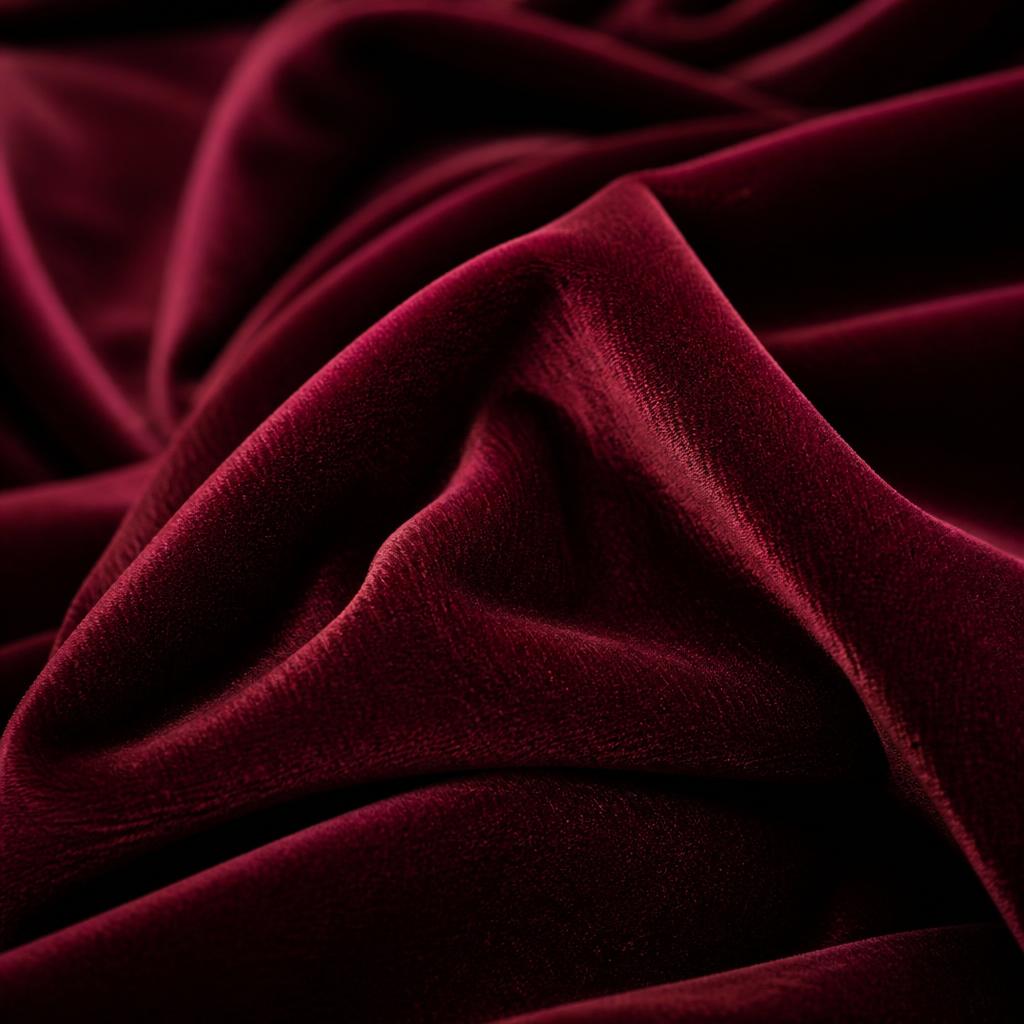
Velvet Fabrics
Pile-woven depth for winter and bridal — silk, viscose, micro and stretch velvets, chosen by pile density and how the nap reads under light.
- Structure
- Cut pile, woven or knitted ground
- Types
- Silk, viscose, micro, stretch, crushed
- Key spec
- Pile density and direction (nap)
- Season
- Winter, bridal and occasion
Velvet is defined by construction rather than fibre. It is woven as a double cloth with an extra warp that is cut to stand upright as pile, and that raised pile is what produces velvet's shifting depth: light absorbed one way, reflected the other. This directionality — the nap — is the single most important thing to get right in production, because cutting panels in opposing directions produces two visibly different shades in the same garment.
Fibre then sets price and behaviour. Silk velvet and silk-viscose blends have the most fluid drape and a liquid, changeable lustre, and are the most delicate. Viscose velvet is the couture workhorse — deep colour, beautiful fall, moderate price. Micro velvet uses fine polyester filament for a dense, smooth, hard-wearing surface that resists crushing and suits volume production. Stretch velvet adds elastane for fitted silhouettes. Crushed velvet is deliberately pressed in random directions for a broken shimmer. We will match fibre and pile density to your silhouette and, just as importantly, tell you what the fabric will do after eight hours of wear at a wedding.
Characteristics of velvet
Pile depth
Determines richness of colour and how dramatically the fabric shifts as it moves.
Nap direction
Colour reads darker against the pile and lighter with it — all panels must be cut one way.
Weight
Substantially heavier than flat weaves; garment structure and hanging must account for it.
Colour depth
Pile traps light, so dark jewel tones reach a saturation flat fabrics cannot match.
Crush sensitivity
Pressure marks the pile; micro velvet resists this best, silk velvet least.
Warmth
The pile insulates, making velvet a winter and cool-evening fabric by nature.
Where velvet is used
Occasion-led and firmly seasonal, with a strong secondary life in interiors.
- Bridal lehengas, blouses and heavily embroidered panels
- Sherwanis, bandhgalas and festive menswear
- Winter evening gowns, jackets and capes
- Structured corsetry and embellished bodices
- Borders, yokes and accent panels against lighter fabrics
- Upholstery, cushions and interior accents
Custom velvet sourcing
Velvet is bought on pile and ground, not on a colour photograph.
- Silk, silk-viscose, viscose, micro and stretch velvet from one supplier
- Pile density and ground weight specified per quality
- Shade matching in both nap directions before approval
- Crushed, embossed and burnout (devoré) treatments to sample
- Panel and border development for bridal cutting plans
- Bulk lots kept to a single dye batch to prevent nap-shade variation
Customisation available on this fabric
Custom Dyeing
Piece dyeing with dips approved in both nap directions, since a velvet reads as two shades depending on orientation.
Digital Printing
Print on velvet requires pile-compatible handling; strike-offs confirm how much definition the pile will hold.
Embroidery
Zardozi, dabka, sequin and thread work on velvet grounds, with backing selected so the pile is not crushed at the frame.
Embossing & Devoré
Heat-embossed patterning and burnout effects for tonal surface interest.
Finishing
Careful pressing and steaming only — conventional finishing flattens pile permanently.
Bulk Supply
Single-batch bulk with roll direction marked, so your cutting room can hold nap consistency.
See the full range of our capabilities or read how a programme runs from brief to bulk.
Why source velvet from us
Nap discipline
Rolls are marked for direction and bulk is held to one dye batch — the two things that ruin velvet orders.
Fibre matched to use
Silk for drape, viscose for couture, micro for durability, stretch for fit; recommended honestly.
Embellishment-ready
We know which velvets survive heavy zardozi and which will crush under the frame.
Bridal season planning
Stock and dye capacity booked ahead of peak so your deliveries are not the ones that slip.
Frequently asked
What is the difference between velvet, velour and velveteen?
Velvet is woven with a cut warp pile. Velour is knitted, so it stretches and drapes more softly. Velveteen has a short weft pile on a cotton ground, giving a matte, sturdier fabric closer to corduroy in character.
Why does velvet look like two different colours?
Because of the nap. Light reflects differently with and against the pile direction. This is why every panel of a garment must be cut in the same direction, and why we mark roll direction before dispatch.
Which velvet is best for bridal wear?
Viscose and silk-viscose velvet for drape and colour depth on lehengas and gowns; micro velvet where heavy embroidery, long wear or travel resilience matters more than fluidity.
Can velvet be embroidered?
Yes, extensively — it is a standard bridal ground. Backing and frame tension must be chosen correctly so the pile is not permanently crushed, which is part of what we specify when routing the work.
How should velvet be stored and cared for?
Hang rather than fold to avoid pile crush lines, steam instead of pressing, and dry clean only. If it must be folded for transport, interleave with tissue and unpack promptly.
Browse the full fabric catalogue or see the industries we serve.
- Premium Fabric Supplier in AhmedabadCurated premium cloth, swatches and development from our Bopal studio.
- Textile Supplier in AhmedabadGreige to finished across cotton, silk, linen, viscose and blends.
- Textile Sourcing Partner in GujaratCluster selection, vendor vetting and inspection across the state.
- Designer Fabric Supplier across IndiaSwatches couriered and bulk dispatched to labels nationwide.
Enquire about velvet
Share the silhouette, shade and embellishment plan. We will recommend pile and fibre, then send swatches in both nap directions.