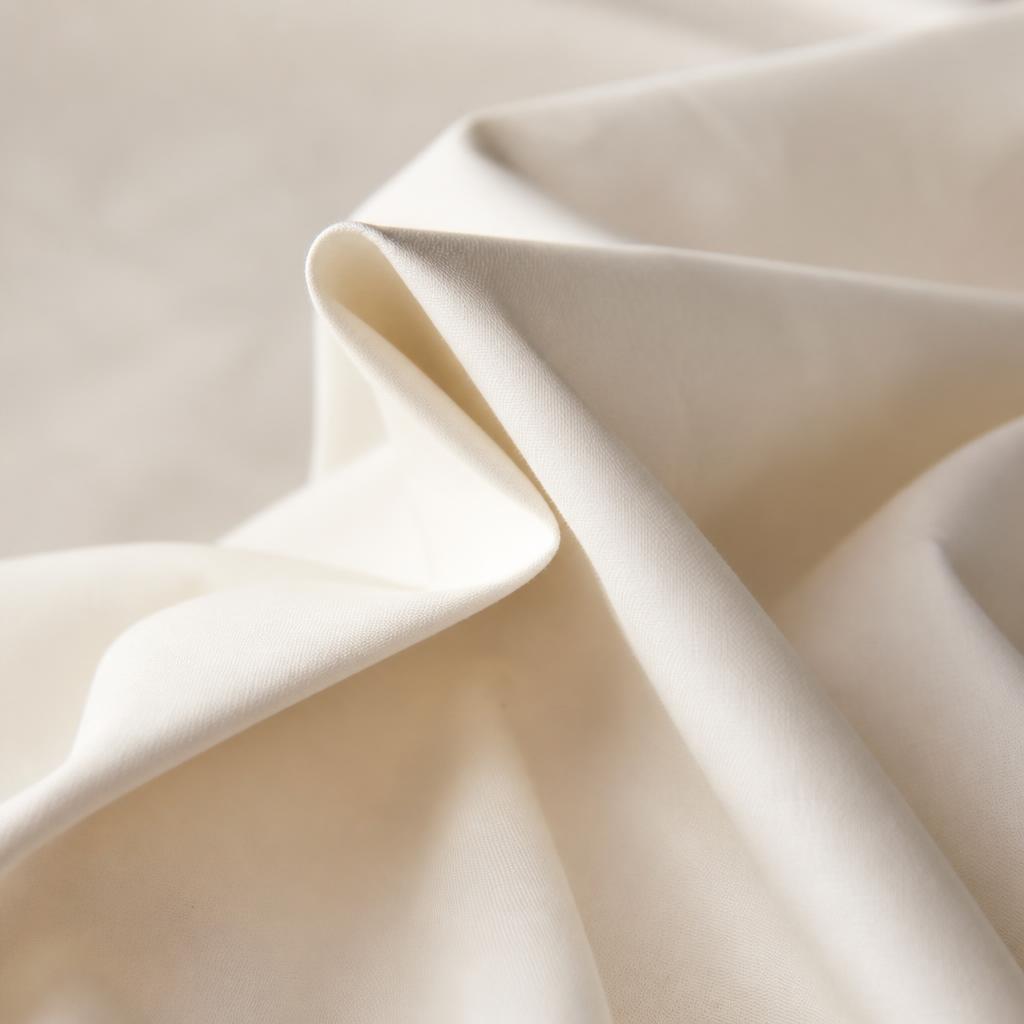
Cotton Fabrics
Poplin, cambric, voile, mul, canvas, slub and south cotton — the workhorse category, supplied with the count and finish written down.
- Constructions
- Poplin, cambric, voile, mul, canvas, slub
- Counts
- 40s to 120s and finer on request
- Finishes
- Mercerised, peached, sanforised, enzyme
- Use
- Volume production and premium capsules
Cotton is the most-ordered fibre in our studio and the one where specification matters most, because the word covers everything from a 40s poplin shirting to a 120s mul so fine it reads as a mist. Yarn count, thread density, finish and shrinkage control decide whether a cotton programme succeeds. Two fabrics can both be 'cotton cambric' and behave completely differently on a cutting table.
We supply across the range. Poplin for crisp shirting with a smooth close weave. Cambric for a soft, medium-weight everyday base. Voile and mul for translucent lightness in summer kurtas and dupattas. Slub and khadi-effect cottons where visible texture is the point. Canvas and duck for structured jackets and bags. South cotton for that dry handloom hand in ethnic separates, and glazed and cotton lining qualities for construction. Every quality is quoted with count, width, GSM and finish stated, and we will tell you the expected shrinkage before you build your pattern rather than after.
Characteristics of cotton
Breathability
Absorbs and releases moisture readily, which is why it remains the default for Indian summer wear.
Comfort
Soft against skin, non-irritating, and suitable for children's and sensitive-skin categories.
Print receptivity
Takes reactive dyes and prints with excellent depth and wash-fastness.
Durability
Strong when wet as well as dry — cotton garments survive repeated laundering.
Shrinkage
Natural fibre movement; sanforised qualities are pre-shrunk and behave predictably in production.
Creasing
Creases readily, which reads as either a flaw or a virtue depending on the collection.
Where cotton is used
It supports the widest span of end uses of anything we stock.
- Shirting, kurtas and everyday ready-to-wear
- Summer dresses, co-ords and resort collections
- Block-printed and hand-crafted ethnic ranges
- Uniform and institutional programmes
- Structured pieces in canvas, duck and twill
- Linings, interlinings and internal construction
Custom cotton sourcing
Most cotton problems are specification problems, so we work from numbers rather than adjectives.
- Count, width, GSM and finish confirmed for every quality quoted
- Greige buying with processing routed to your finish requirement
- Organic and sustainably grown cotton on request, with documentation where available
- Pre-shrunk (sanforised) supply for programmes with tight fit tolerances
- Yarn-dyed checks, stripes and dobby developed to your artwork
- Volume pricing with staged deliveries against a production calendar
Customisation available on this fabric
Custom Dyeing
Reactive dyeing with strong wash-fastness; lab dips approved before bulk, and dye lots reserved for repeats.
Digital Printing
Prepared-for-print cotton bases with steaming and washing after print for depth and hand.
Hand Block Printing
Kutch and Rajasthan block work, including Ajrakh and natural-dye programmes on cotton grounds.
Screen Printing
Rotary and flat-bed screen for repeat volume runs at competitive cost per metre.
Embroidery
Machine and hand embroidery, Schiffli lace and cutwork on cotton bases.
Finishing
Mercerising for sheen and dye uptake, peaching for softness, sanforising for dimensional stability, enzyme wash for a lived-in hand.
See the full range of our capabilities or read how a programme runs from brief to bulk.
Why source cotton from us
Numbers, not adjectives
You get count, GSM, width and shrinkage — the data your pattern and costing depend on.
Print-ready supply
Bases are prepared correctly for the print route you have chosen, so colour lands as approved.
Handloom and mill
Artisan khadi-effect and south cotton alongside mill-consistent poplin and cambric.
Volume without drift
Repeat lots are matched to the approved standard, not re-interpreted each season.
Frequently asked
Which cotton is best for summer clothing?
Voile, mul and fine cambric in higher counts are the most breathable and lightest. Poplin works for crisp shirting, while slub and south cotton give texture with good airflow.
What does thread count mean in cotton?
In apparel we more often speak of yarn count — a higher count means a finer yarn, giving a lighter, smoother, usually more expensive fabric. Thread density (ends and picks) then determines how closely that yarn is woven.
How much does cotton shrink?
Untreated cotton commonly moves three to seven percent on first wash. Sanforised (pre-shrunk) qualities move considerably less. We state expected shrinkage per quality so patterns can be planned correctly.
Do you supply organic cotton?
Yes, on request, with available certification documentation shared before order. Availability and lead times differ from conventional cotton, so plan a little further ahead.
Can cotton be dyed to a specific Pantone?
Yes. We produce a lab dip on your actual base for written approval, then match bulk to the approved dip and reserve the lot for repeat orders.
Browse the full fabric catalogue or see the industries we serve.
- Premium Fabric Supplier in AhmedabadCurated premium cloth, swatches and development from our Bopal studio.
- Textile Supplier in AhmedabadGreige to finished across cotton, silk, linen, viscose and blends.
- Textile Sourcing Partner in GujaratCluster selection, vendor vetting and inspection across the state.
- Designer Fabric Supplier across IndiaSwatches couriered and bulk dispatched to labels nationwide.
Enquire about cotton
Send the count, weight and finish you need — or just the garment you are making — and we will send matched swatches with full specifications.