Fabric Care Guide
Storage, washing and repair advice you can pass to your customer — written for cloth that deserves to outlast a season.
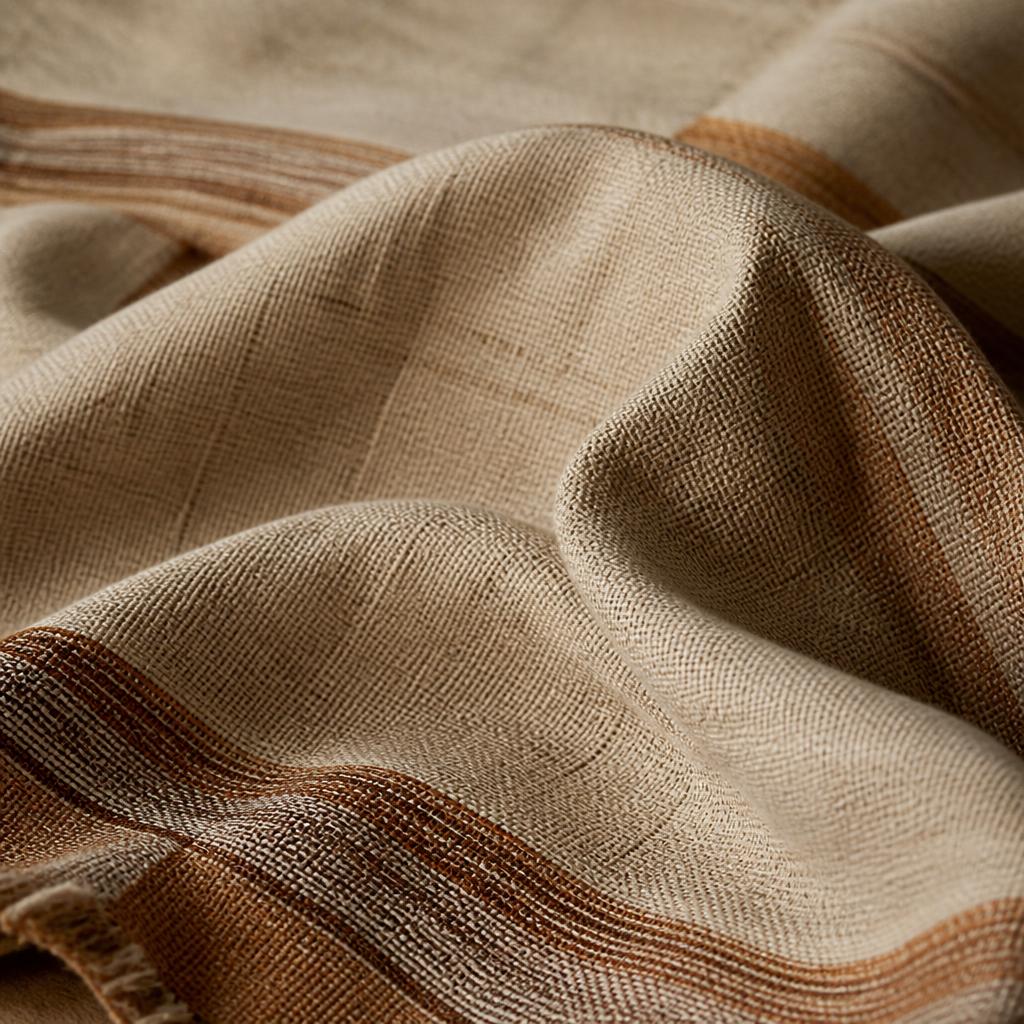
Fine cloth fails far more often from poor care than from poor construction. Zari blackens in a plastic bag, silk yellows in sunlight, linen splits along a hard fold, velvet crushes flat under a stack of clothes — all avoidable.
This guide covers the care rules worth knowing as a supplier, and the ones worth printing on the care card that leaves your studio with every garment.
Storage is where most damage happens
Store natural fibres in breathable cotton or muslin bags, never in plastic. Plastic traps moisture, encourages mildew in humid months, and accelerates the oxidation that turns real zari dull and dark.
Refold heavy pieces every few months. Sarees and worked garments left folded on the same crease line for a year will develop permanent weakness there, and on zari-heavy cloth the fold will eventually cut. Rolling on a tube is better again for embroidered panels.
- Cotton or muslin covers, never plastic
- Refold along different lines every few months
- Roll heavily embroidered pieces rather than folding them
- Keep storage cool, dark, dry and away from direct sunlight
Washing by fibre
Silk and zari: dry clean only, and use a cleaner who knows textile work. Water and standard detergents strip silk's natural lustre and will tarnish metallic yarn permanently.
Cotton and linen: cold or lukewarm hand wash with a mild detergent, no bleach, no wringing. Dry flat or on a line in shade — direct sun fades reactive dyes and weakens fibre over time. Khadi and handloom cottons often bleed on the first two or three washes and should be washed separately.
Velvet: never wash at home. Steam gently from the reverse to lift the pile and always dry clean with a specialist.
Ironing and steaming
Always iron from the reverse, with the lowest heat that does the job, and use a pressing cloth on anything with sheen. Direct high heat glazes silk, flattens texture and can shrink synthetics in seconds.
For velvet, sheers and embroidered surfaces, steam rather than press. Hold the steamer a few inches away and let the moisture relax the fibre — pressing a pile fabric flat is not reversible.
- Iron inside out, low heat, always with a pressing cloth on sheen
- Steam velvet, organza and embroidery instead of pressing
- Never iron directly over zari, sequins or beadwork
Stains and first response
Blot, never rub. Rubbing pushes a stain into the yarn structure and abrades the surface of fine cloth beyond repair. Lift what you can with a clean, dry white cloth and stop there.
Do not apply water to silk as a first response — it leaves a ring that is harder to remove than the original mark. Take the garment to a specialist cleaner promptly and tell them exactly what the stain is; guessing costs garments.
Care cards worth issuing
A short, specific care card raises perceived value and reduces returns. Name the actual fibre and construction, give the washing method, the ironing temperature, the storage instruction, and a line on expected natural variation for handloom or hand-dyed pieces.
Setting that expectation in writing turns a slub, a small irregularity or gentle first-wash bleeding from a complaint into a mark of authenticity — which, on handmade cloth, is exactly what it is.
- Breathable storage and periodic refolding prevent most long-term damage.
- Dry clean silk and zari; hand wash cotton and linen cold, dry in shade.
- Iron from the reverse with a cloth; steam velvet, sheers and embroidery.
- Blot stains, never rub, and never water-spot silk as a first response.
- Issue a specific care card and state natural handloom variation upfront.
Bring the question to the studio
Reading only takes you so far. Handle the cloth, compare qualities side by side, and let us build the fabric plan for your collection with you in Ahmedabad.