Banarasi vs Brocade
Every Banarasi is a brocade; almost no brocade is Banarasi. Where the two part company, and which one your collection actually needs.
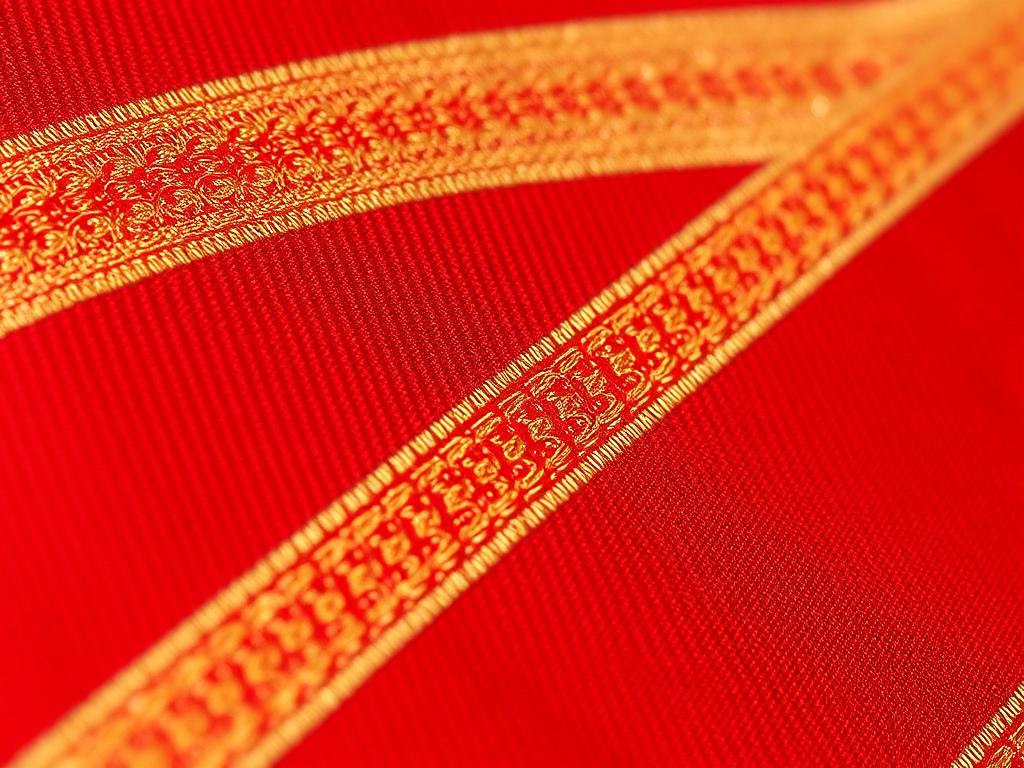
The two words are used interchangeably on almost every sourcing call, and the confusion costs money. Brocade is a category of weave — any cloth in which a supplementary weft floats across the ground to build a raised pattern. Banarasi is a place, a lineage and a specific set of techniques practised in and around Varanasi.
Understanding the difference changes what you ask for, what you pay, and what you promise a client. This piece sets out the technical distinction, the two Banarasi weaving methods worth knowing by name, and a practical rule for choosing between them.
Brocade is a construction
In a brocade the pattern is not printed or embroidered — it is built during weaving by an extra weft yarn carried across the ground cloth and floated where the motif appears. That supplementary yarn can be zari, silk, viscose or a metallic blend, and the ground can be silk, cotton, satin or a synthetic base.
Because it is a construction rather than an origin, brocade is woven in Surat, Bangalore, China, Turkey and Italy as much as in Varanasi. Modern powerloom and jacquard brocades are excellent value: consistent, wide, reproducible, available in commercial quantities and shorter lead times.
Banarasi is a lineage
Banarasi weaving carries a documented vocabulary — kadhwa, fekuwa, kadiyal, tanchoi, jamawar, cutwork — each describing how the supplementary weft is handled and finished. It is traditionally woven in mulberry silk with real or tested zari, on handlooms that produce narrow widths at slow speed.
That lineage is why a genuine Banarasi carries weight and depth a generic brocade rarely matches. It is also why it costs more and takes longer: a heavily patterned kadhwa piece is measured in weeks per length, not metres per hour.
Kadhwa vs fekuwa — the distinction that sets price
In kadhwa weaving, each motif is woven separately and the extra weft is cut and tied off at the boundary of the motif. The reverse is clean-ish, the cloth stays supple, and the motifs can be placed with intent. It is slow, skilled and expensive.
In fekuwa, the supplementary weft is thrown continuously across the full width and the long floats between motifs are cut away after weaving. It is faster and cheaper, but the cloth is heavier, slightly stiffer, and the reverse shows the trimmed float ends. Neither is wrong — but a client paying kadhwa prices for fekuwa cloth will eventually notice.
- Kadhwa — motif-by-motif, supple, expensive, best for placed designs and bridal
- Fekuwa — continuous weft, cut floats, heavier hand, better value for repeat all-overs
- Ask which method was used and inspect the reverse to confirm it
How they behave in a garment
A handloom Banarasi arrives narrow — often 44 to 46 inches — with real loom variation and a weight that suits sarees, lehenga panels, structured jackets and sherwanis. Cutting it into a fluid Western silhouette wastes both the cloth and its character.
A jacquard brocade in a wider width with a viscose or blended zari drapes softer, cuts more economically, and takes tailoring far more willingly. For a commercial festive line at accessible price points, that is usually the correct answer, and saying so honestly is better than overselling provenance.
A working rule for buyers
Choose Banarasi when the story matters — bridal, heirloom, a signature piece, a collection built on craft provenance and priced accordingly. Choose a contemporary brocade when consistency, width, repeatability and delivery date matter more than lineage.
Many strong collections use both: Banarasi for the hero pieces and hero panels, brocade for the supporting range that keeps the price ladder sensible. What matters is that the distinction is intentional and disclosed.
- Brocade names a weave construction; Banarasi names an origin and a technique set.
- Kadhwa is motif-by-motif and costly; fekuwa uses continuous floats and costs less.
- Handloom Banarasi is narrow, heavy and best for traditional silhouettes.
- Jacquard brocade offers width, consistency and shorter lead times.
- Use both deliberately — hero craft pieces above, commercial brocade beneath.
Bring the question to the studio
Reading only takes you so far. Handle the cloth, compare qualities side by side, and let us build the fabric plan for your collection with you in Ahmedabad.