Cotton vs Linen
Two natural staples, two completely different personalities — and a shrinkage conversation you want to have before cutting, not after.
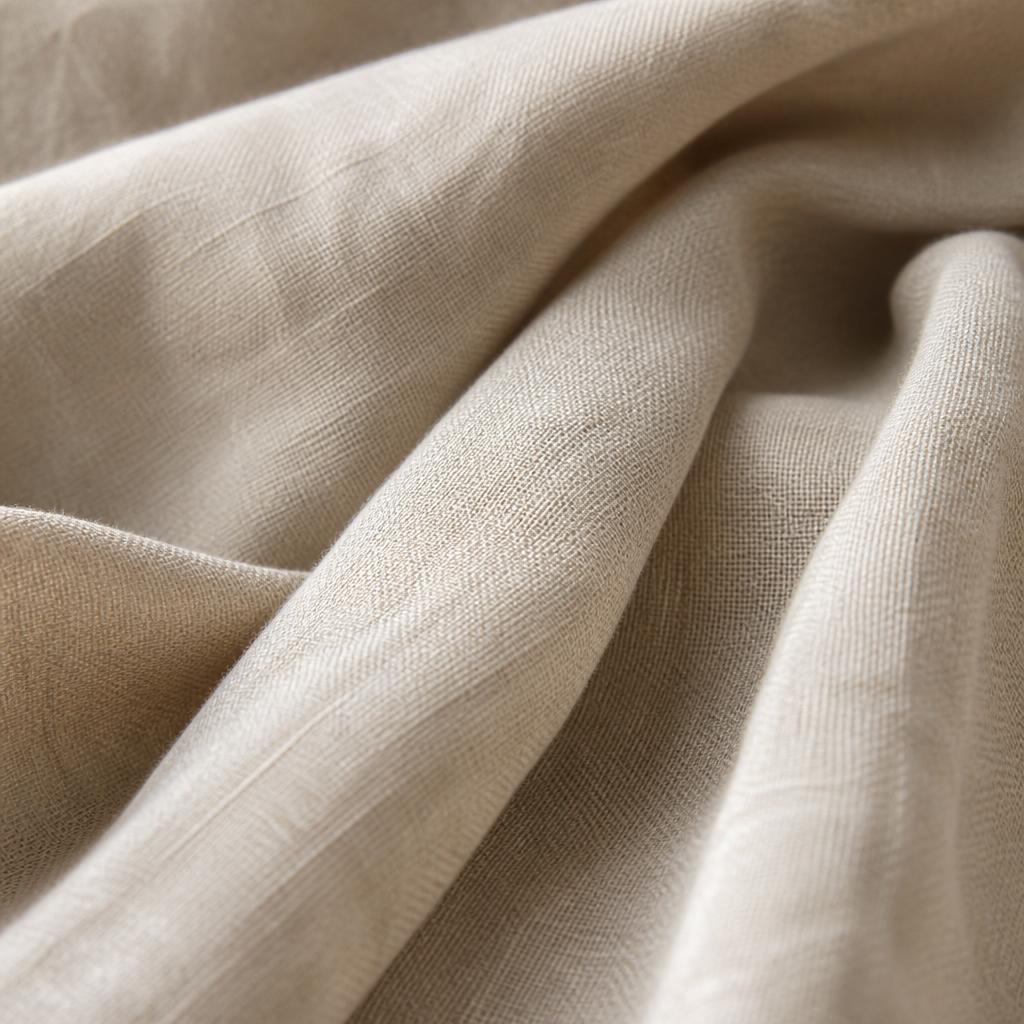
Cotton and linen sit side by side in almost every summer range, and they are chosen almost interchangeably. They should not be. Cotton comes from the seed boll and produces a soft, round, uniform staple. Linen comes from the flax stem and produces a long, irregular, hollow fibre with far greater strength and a distinctive dry hand.
Those structural differences drive everything downstream — comfort, creasing, dyeing, shrinkage and price. Here is how to choose between them with intent.
How each fibre feels and behaves
Cotton is soft immediately, takes a smooth finish, and is easy to sew and to sell. It absorbs moisture and holds it, which is why a cotton shirt feels damp on a humid Ahmedabad afternoon and a linen one does not.
Linen's hollow fibre moves moisture away quickly and conducts heat away from the skin, which is why it reads as cooler even at a higher weight. It begins drier and slightly stiff and softens over years of wear — the reason good linen is treated as an investment cloth rather than a seasonal one.
Creasing: a fault or a feature
Linen creases. It creases because the fibre is stiff and inelastic, and no finish removes that entirely without compromising the hand. The market has largely accepted this as part of linen's character, but the customer segment matters: a relaxed resort buyer will love it and a formal uniform buyer will not.
If a programme needs linen's look with less crease recovery drama, a linen-cotton or linen-viscose blend is the honest answer. It softens the crease, improves the hand at lower price, and still reads as linen at three feet.
- Pure linen — maximum breathability and character, maximum creasing
- Linen-cotton — softer, calmer creasing, more forgiving in production
- Linen-viscose — fluid fall for dresses and drapey silhouettes
Shrinkage and pre-treatment
Both fibres shrink, and linen shrinks more — commonly three to six percent, and more if it has not been pre-washed. This must be settled before patterns are graded, not discovered when the first wash returns garments a size down.
Ask whether the cloth is pre-shrunk, sanforised, garment-washed or greige. Then run your own shrinkage test on the delivered lot: cut a measured square, wash and dry it exactly as the customer will, and re-measure. Build the result into the pattern rather than into the returns policy.
- Confirm pre-shrunk or sanforised status in writing on the purchase order
- Test a measured square from the actual delivered lot
- Grade patterns to the measured residual shrinkage, not to a supplier estimate
Colour, weight and finishing
Cotton takes reactive dyeing cleanly and holds bright, saturated shades. Linen's natural colour and irregular surface pull most shades slightly muted and earthy — which is precisely why natural, ecru, indigo, olive and clay ranges look so convincing in linen and slightly flat in cotton.
Weight matters more in linen than buyers expect. A 120 GSM linen is a sheer summer shirt; a 250 GSM linen is trousering and structured jackets. Specify GSM alongside the count, and confirm whether the finish is soft-washed, calendered or left loom-state.
Choosing for a range
Reach for cotton when you need clean colour, predictable production, everyday softness and a price point that scales — shirting, prints, kidswear, linings and volume prêt.
Reach for linen when texture and provenance are the selling point — resort, slow-fashion, artisanal ranges, tailored summer pieces and any collection where the customer values character over crispness. Where the brief is caught between the two, a blend is a design decision, not a compromise.
- Cotton is soft, uniform and colour-true; linen is dry, strong and cooling.
- Linen creases by nature — choose the customer, or choose a blend.
- Settle shrinkage before pattern grading, and test the delivered lot yourself.
- Specify GSM as well as count; linen behaves very differently across weights.
- Blends are a legitimate design tool, not a downgrade.
Bring the question to the studio
Reading only takes you so far. Handle the cloth, compare qualities side by side, and let us build the fabric plan for your collection with you in Ahmedabad.