Textile Trends 2026
What we are seeing move through the studio this year — traceability, quiet craft, engineered naturals and a return to weight.
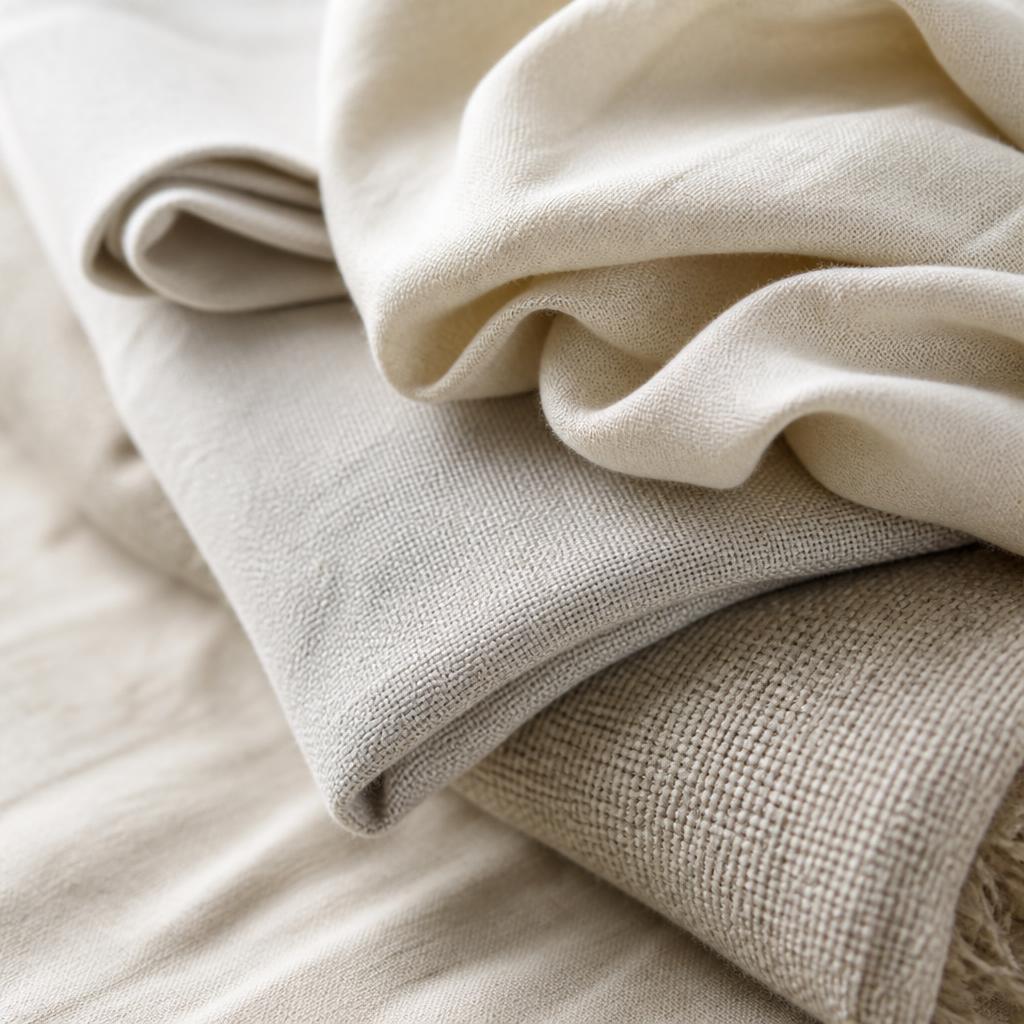
Trend reporting in textiles is usually written from runway photographs. This is written from order books — the qualities designers, boutiques and export houses have actually been asking us to source and develop through the last twelve months.
Five movements stand out for 2026, and each has a practical implication for how a collection should be planned and priced.
01 · Traceability becomes a specification
Buyers are asking where cloth came from, and increasingly asking in writing. European import requirements and domestic conscious-consumer pressure have converged, so weaver cluster, dye house and certification status now sit in purchase orders next to GSM and width.
The practical implication: build documentation into sourcing from the first sample rather than reconstructing it under audit pressure later. Fabric with a clean, verifiable story is also easier to sell at a premium.
02 · Quiet craft over loud embellishment
The heaviest embellishment cycle has softened. Demand has moved toward woven texture, tonal work, subtle jamdani and jacquard interest, and self-coloured embroidery — luxury signalled through construction rather than through sequins.
This favours handloom, fine brocade and textural weaves, and it rewards suppliers who can talk credibly about how a cloth was made. It also shortens embellishment timelines, which helps a compressed production calendar.
- Tonal and self-coloured embroidery over contrast sequin work
- Woven texture, dobby and fine jacquard carrying the design
- Handloom irregularity treated as a value marker
03 · Engineered naturals and honest blends
Pure-fibre purism is giving way to intelligent blending: linen-viscose for fluidity, cotton-silk for sheen at accessible cost, modal and cupro linings replacing polyester, and recycled content appearing in commercial bases without apology.
The key shift is disclosure. Blends stated openly and explained on the hangtag now perform better than blends hidden behind a natural-sounding name.
04 · Weight returns to occasion wear
After several seasons of lightness, occasion wear is moving back toward substance — heavier silks, velvets, structured brocades and cloth that holds a sculpted line. Bridal in particular is favouring architecture over volume.
Plan for it: heavier bases change embroidery framing, lining choice, garment weight and freight cost. Cost these in at the design stage rather than absorbing them at delivery.
05 · Smaller, faster, more frequent drops
Boutiques and independent labels are moving away from two large seasons toward smaller, more frequent releases. That changes fabric buying more than it changes design: shorter runs, more colourways, faster reorders and a much greater need for a supplier who holds stock and can repeat a shade.
For a sourcing partner, the useful capability is no longer only breadth of range — it is the ability to hold a quality, keep a shade standard on file and deliver a small top-up quickly.
- Fewer metres per style, more styles per year
- Shade standards held on file for reliable reorders
- Stock-supported qualities preferred over long-lead exclusives
- Document provenance from first sample — traceability is now a spec line.
- Texture and tonal work are replacing heavy contrast embellishment.
- Blends are mainstream; disclose them clearly and they sell better.
- Occasion wear is getting heavier — cost the consequences at design stage.
- Smaller, more frequent drops reward suppliers who hold shade and stock.
Bring the question to the studio
Reading only takes you so far. Handle the cloth, compare qualities side by side, and let us build the fabric plan for your collection with you in Ahmedabad.